

The Good Samaritan and Forgiveness
Forgiveness is an ever-elusive Christian virtue. Especially among Christian circles. My pastor encouraged us to create logical syllogisms this last Sunday. Here is my effort:
Christians are terrible at forgiving each other.
Israel Shaw is a Christian.
Therefore, Israel Shaw is terrible at forgiving other Christians.

I’m confident you know that gregarious, bubbly happy Christian who jumps at the chance to forgive people thus trying to upend my syllogism. I am not that person. I want to be that way. My cynical, sarcastic, cantankerous personality gets in the way. To forgive is not natural to me.
I, who can’t even keep my financial records straight, keep a tally of wrongs I can’t possibly track. Why then am I so intent in have the strength to do something unnatural to me? Why do I long to forgive others? I hunger to forgive because it is so wonderful to forgive. Like getting blood drawn at the medical clinic. After it is over, the anticipation of forgiveness is the worst part.
Once upon a time,
it was because
Jesus told me so.
Now it is because
Jesus has shown me so.
Unlike blood drawn, the forgiveness of sins has an eternal impact. God forgives.

I want to forgive because I experience the joy found in forgiveness. I know it from repeat practice. Yet, I still struggle to forgive. I fight for every act of forgiveness. When I seek to receive it to. When I seek to give it. Forgiveness changes history and lives.
Yesterday, I was driving to a meeting. The intent of the meeting? To have the healing of our relationship. Of one to seek forgiveness, the other to offer forgiveness.
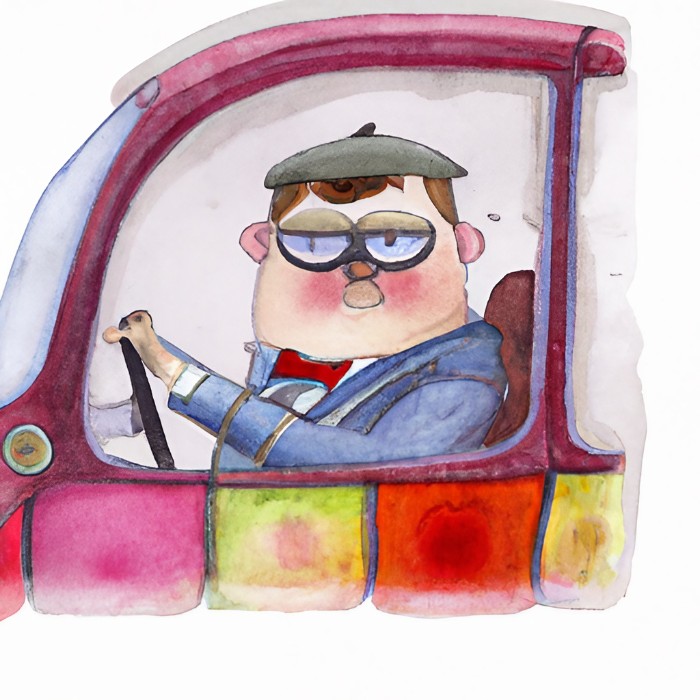
I engaged In the battle as I drove to that meeting. Did I want this relationship alive again? Was it worth renewing the risk of friendship? In that battle, God recalled the parable of The Good Samaritan to my mind. It is one of the often-overlooked Scriptures that teaches forgiveness of sins as part of God’s way.
Question:
What is the point of the parable of The Good Samaritan?
What is your answer? Is it to be a good neighbor? Or did you swing for the fences? After all, I did mention forgiveness in the Bible. Maybe that is sleight of hand? Maybe I’m distracting you. Is your answer written down? No? Go ahead and finish it.
Let’s key in on the discourse between this lawyer and Jesus.

The Dialogue
My comments are italicized.
Actual Dialogue With My Commentary
Lawyer: “Teacher, what shall I do to inherit eternal life?”
The Lawyer is concerned about righteousness. He wants to be sure he is righteous. This tells us about the lawyer’s perspective. Based upon the context – being righteous means “saved from God’s righteous wrath against a rebellious creation that does not keep His Law.” Why is he concerned with eternal life? Because there is eternal death. Not just physical death. Much, much worse than that. Spiritual death! This lawyer wants to know if he is justified before God. Does he know he has guilt?
The lawyer doesn’t use the terminology of salvation. Perhaps in his mind, he already has been redeemed and is justified before God. He is invested in the result of salvation – eternal life.
Jesus: “What is written in the Law? How do you read it?”
“What is your current position on the subject?”
Lawyer: “You shall love the Lord your God with all your heart and with all your soul and with all your strength and with all your mind, and your neighbor as yourself.”
Rephrase the lawyer’s answer in your own words. Don’t worry – we will check our work later.
Jesus: “You have answered correctly; do this, and you will live.”
“You got it, bro!”
Lawyer: “And who is my neighbor?”
Yes, Teacher,…but what are the boundaries to this command? How do I remain justified in these boundaries?
Jesus: “A man was going down from Jerusalem to Jericho, and he fell among robbers, who stripped him and beat him and departed, leaving him half dead. Now by chance a priest was going down that road, and when he saw him he passed by on the other side. So likewise a Levite, when he came to the place and saw him, passed by on the other side. But a Samaritan, as he journeyed, came to where he was, and when he saw him, he had compassion. He went to him and bound up his wounds, pouring on oil and wine. Then he set him on his own animal and brought him to an inn and took care of him. And the next day he took out two denarii and gave them to the innkeeper, saying, ‘Take care of him, and whatever more you spend, I will repay you when I come back.’
Which of these three, do you think, proved to be a neighbor to the man who fell among the robbers?”
What does Jesus’ answer mean? What is he telling the Lawyer? Is it:
A) That everyone, everywhere is my neighbor. No exceptions.
B) That the way to love God is by being conscientious in our interactions with other people.
C) That being obedient to God’s Law means making appropriate reparations to other ethnic groups your ethnic group has wronged in the past.
D) All of the above.
E) Another option, please.
(Please choose 1 answer.)
Lawyer: “The one who showed him mercy.”
Jesus: “You go, and do likewise.”
(Luke 10:25-37 ESV)
Parables Highlight How Jesus is the Stone of Stumbling
I’m going to remove the original text – the actual discourse – and focus on my interpretive rephrasing. While the Lawyer’s first question is super astute, he asks from the wrong perspective. Thus he is listening for the wrong thing.

Who is My Neighbor?
Just like the Samaritan Woman. Just like Peter when he asks Jesus how many times to forgive others. Just like me. Just like you. We ask the wrong questions. Jesus is so gracious to speak gently into our lives so that we might wrestle over these disconnects.
This parable is one of those texts that show us how to navigate Scripture regarding Jesu as the “stumbling stone.” I mention it because I see people stumble over this parable with regularity.
This parable is a biblical landmark. As such, it is a cliff with warning signs not to get too close ledge. There are no barriers stopping you should you choose to disregard the warnings. Like coming into a sharp turn on the cliffside, the warnings can be seen before the danger is seen. So here, I’m giving you notice to pay attention. We need their mindfulness as we proceed forward.
The Rock of Stumbling in Isaiah 8:14 – 15.
And he will become a sanctuary
and a stone of offense
and a rock of stumbling
to both houses of Israel,
a trap
and a snare
to the inhabitants of Jerusalem.
And many shall stumble on it.
They shall fall and be broken;
they shall be snared and taken.”
(ESV)
Christ Jesus is the Stumbling Stone in these bible verses. Thankfully, we are given Scripture in that provides illumination for this prophecy. Here are two from the New Testament.
“but that Israel –
who pursued a law that would lead to righteousness –
did not succeed in reaching that law.
Why?
Because they did not pursue it by faith,
but as if it were based on works.
They have stumbled over the stumbling stone,
as it is written,
“Behold, I am laying in Zion a stone of stumbling,
and a rock of offense;
and whoever believes in him will not be put to shame.
(Romans 9:31-33 ESV)
“So the honor is for you who believe,
but for those who do not believe,
“The stone that the builders rejected
has become the cornerstone,”
and
“A stone of stumbling,
and a rock of offense.”
They stumble because they disobey the word,
as they were destined to do.”
(1 Peter 2:7-8)
Dialogue Rephrased
Now that we have our bearings, I offer my initial rephrasing of the conversation between Jesus Christ and the lawyer. I do this to follow the progression of thought in the discourse. It is a difficult prospect to understand the nuances of dialogue from two thousand years ago. Worlds away from Jesus’ culture and context.
Lawyer: “What does it mean to be saved?”
Jesus: “Tell me your current answer.”
Lawyer: “I need to love God with all I am, and my neighbor in the same fashion I love myself.”
Jesus: “Yes. Correct.”
Lawyer: “Yes, Teacher,…but what are the boundaries/limitations to this command? When am I justified to not be beholden to this law?
Jesus: “There are no boundaries or limitations.”
Lawyer: “Including showing mercy to the greatest of enemies.”
Jesus: “Exactly.”
The Lawyer is interested in finding the boundaries. Why? Because he is a lawbreaker. He needs to justify himself. Laws are made for lawbreakers. Speed limits didn’t exist until people drove recklessly. Innumerable laws now exist solely committed to this reality. Laws are created to keep us natural lawbreakers hemmed in.
Responsible Driving Dialogue
Using the illustration of responsible driving, perhaps the conversation would go this way:
Lawyer: “What does it mean to be a good driver?”
Jesus: “Tell me your current answer
Lawyer: “When I am to drive, I am to glorify God in my driving. I am to drive in a manner considerate to other drivers like I want them to drive in regards to me.”
Jesus: “Yes. Correct.”
Lawyer: “Yes, Teacher,…but what about a drunk driver?
Jesus: “An excellent driver with the top scores in telematics was going driving from Jerusalem to Jericho. At a rest stop, he was carjacked. These assailants stripped him, beat him, and stole his vehicle and all his belongings, including his wallet. After robbing him, they departed, leaving him half dead.
Now by chance, a police officer was going down that road, and when he saw the man laying there he passed by on the other side. So likewise a paramedic, when he came to the place and saw him, passed by on the other side. But a drunk, as he weaved in and out of traffic, came to the rest stop and where the man lay. When he saw him, the drunk had compassion. He went to him and bound up his wounds, pouring whiskey on the man’s wounds, and tearing his shirt into bandages to bind the man’s injuries. Then the drunk gently laid the injured man in his vehicle and brought him to a hospital to care for him. The drunk put his bank account info in the billing section to ensure the man’s care had no limit.

Which of these three, do you think, proved to be a good driver to the man who fell among the carjackers?”
Lawyer: The drunk driver.Jesus: Go, and do likewise.
Back to the actual discourse with Jesus. If this lawyer struggles to understand this most primary of questions –
- A recognized expert in God’s Word (aka God’s Law)
- Knows the context and culture of the 1st Century.
- Knows the context of the intertestamental period of Jews.
- Knows Jewish teachings and commentaries intimately
– then how hard it is for the rest of us to understand the Law! Never mind trying to keep it.
Does the Lawyer understand Jesus’ response? His response hints at “yes…maybe.” He brings mercy into the conversation. The lawyer kept score. The word “mercy” by its very definition recognizes a wrong that needs accounting. Justice cries out. Mercy satiates justice through forgiveness. Then justice does not dish out its warrant. Mercy identifies wrongs. Mercy accounts for the damage. Mercy declares the value of the other person. This means forgiveness is the way forward.
Bring this parable back into the broader dialogue. Remember our mindfulness that Jesus is the rock of offense. That Jesus is the stumbling stone. You can see the offense in the use of a drunk driver. Consider how the verses on Jesus as the rock of stumbling use faith and obedience vs works of self-righteousness as trail markers.

Let’s check our initial answer. What is this parable about? It is about how I need Jesus as my Savior. This is a conversation on salvation. The first question steers the entire conversation. Just like with the Samaritan woman, this lawyer wants to be reaffirmed in his theology. Jesus is showing him the way from the lawyer’s position to eternal life. One more time, I am going to reimagine Jesus’ conversation with the lawyer.
Lawyer: Teacher, what shall I do to inherit eternal life?
Jesus: What is written in the Law? How do you read it?
Lawyer: That I am to Love the LORD my God with all my heart and with all my soul and with all my strength and with all my mind. Also, I am to love my neighbor as I love myself.
Jesus: You have answered correctly; do this, and you will inherit eternal life.
Lawyer: But how can I keep the law if I don’t know all the proper definitions?
Jesus: It is the lawbreaker who concerns himself with the boundaries of the law.
Lawyer: Mercy is the way?
Jesus: Yes.
I hope you see how forgiveness of sins is part of the undercurrent that is flowing in this text. How this text is meant to point us to Jesus in faith because we can’t. We can’t keep the law. We are concerned with the law’s boundaries because that is where many of us live. Self-righteousness wants to put a rail up on the ledge to stop us from going over. Who wants a rail but the one who drives in a fashion that needs a rail? If everyone drove in a manner where going over the cliff was never an option then a rail would never be conceived, much less installed.
But this conversation on the rails of the Law testifies to our guilt and that we need a Savior. The way starts with mercy. First, receive God’s mercy, then share that same wonderful mercy with others as you continue to seek more and more mercy. For our need never ends. For all our days we will live in mercy as children of God.
Heavenly Father,
You are the just God.
When we toil in labor,
You display Mercy.
When we toil to be law keepers,
You display forgiveness of sins as a beacon.
Help us when we fall into traps that seek to be justified in Christ by our endeavors.
Heavenly Father,
through the Holy Spirit,
give us victorious life today.
Through the Holy Spirit, give us
the strength to die to self and live to Jesus Christ.
Thank you for Jesus,
whose love for me
resulted in his crucifixion.
He intentionally, foreknowingly gave Himself for me.
Thank you, Father. Thank you for the good death of Jesus our Savior. Thank you for his bodily resurrection.
In Christ Jesus – Amen.

Scripture quotations are from the ESV® Bible (The Holy Bible, English Standard Version®), copyright © 2001 by Crossway, a publishing ministry of Good News Publishers. Used by permission. All rights reserved. The ESV text may not be quoted in any publication made available to the public by a Creative Commons license. The ESV may not be translated into any other language.
Users may not copy or download more than 500 verses of the ESV Bible or more than one half of any book of the ESV Bible.
One Comment
Comments are closed.